What goes into the cost of a rigid box?
November 2026
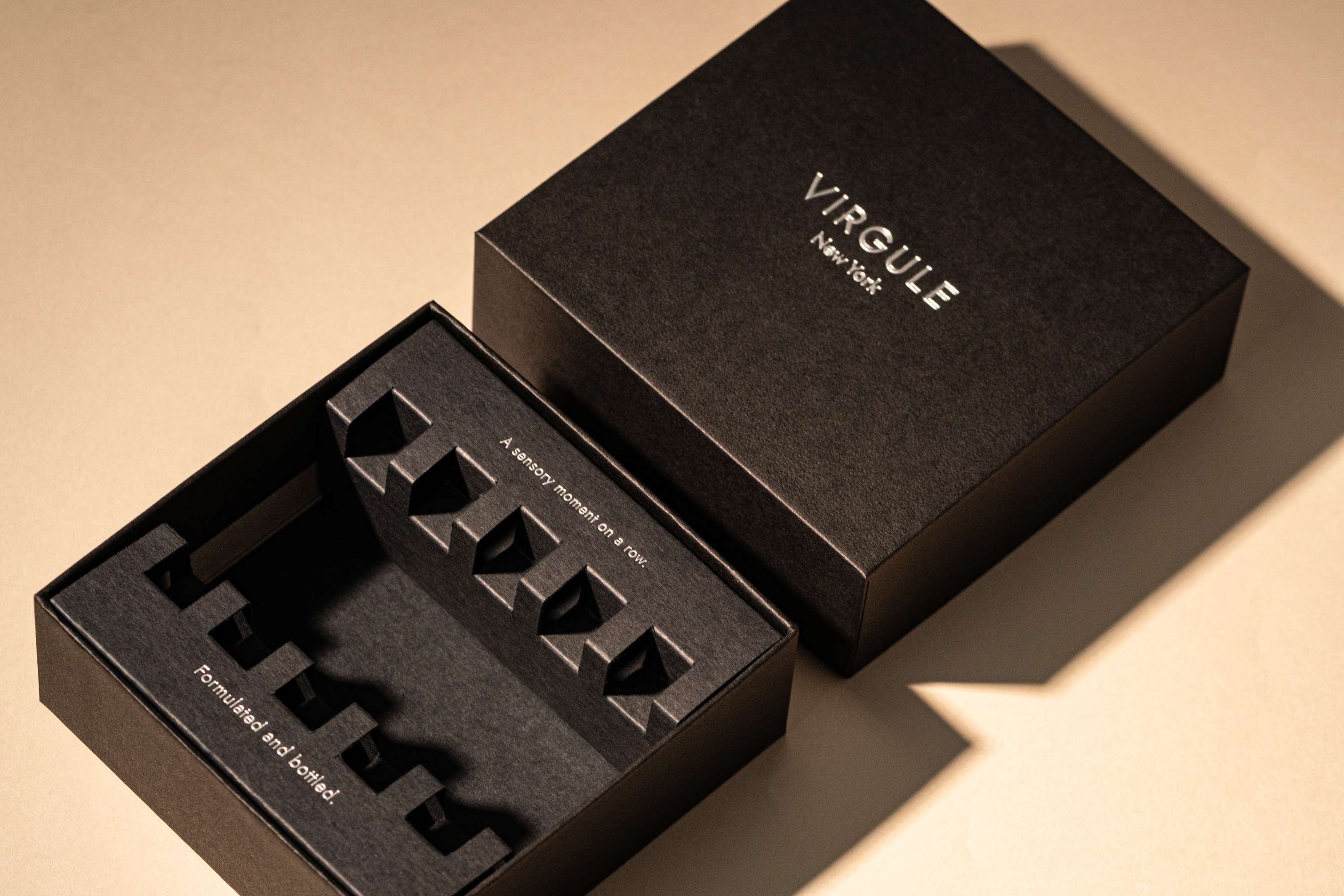
A rigid box is priced the way it is built: one decision at a time, and almost all of them visible.
There is no catalog price for a custom rigid box, because there is no catalog box. The number comes from what the box is made of and what it is asked to do, and nearly every one of those decisions can be seen and held. That makes the useful question less how much than what for.
Size decides the sheet
Board and paper are bought by the sheet, and the flat layout of a box decides how many pieces fit on one. Nudge a footprint by a fraction of an inch and the parts can suddenly nest better, which is why the first conversation is about the product's dimensions rather than the box's.
Thickness follows weight. Greyboard runs from about 1.2 mm for a light piece to 2 mm for a heavy bottle or a set of candles, so the walls stay square under load.
Paper is where the money shows
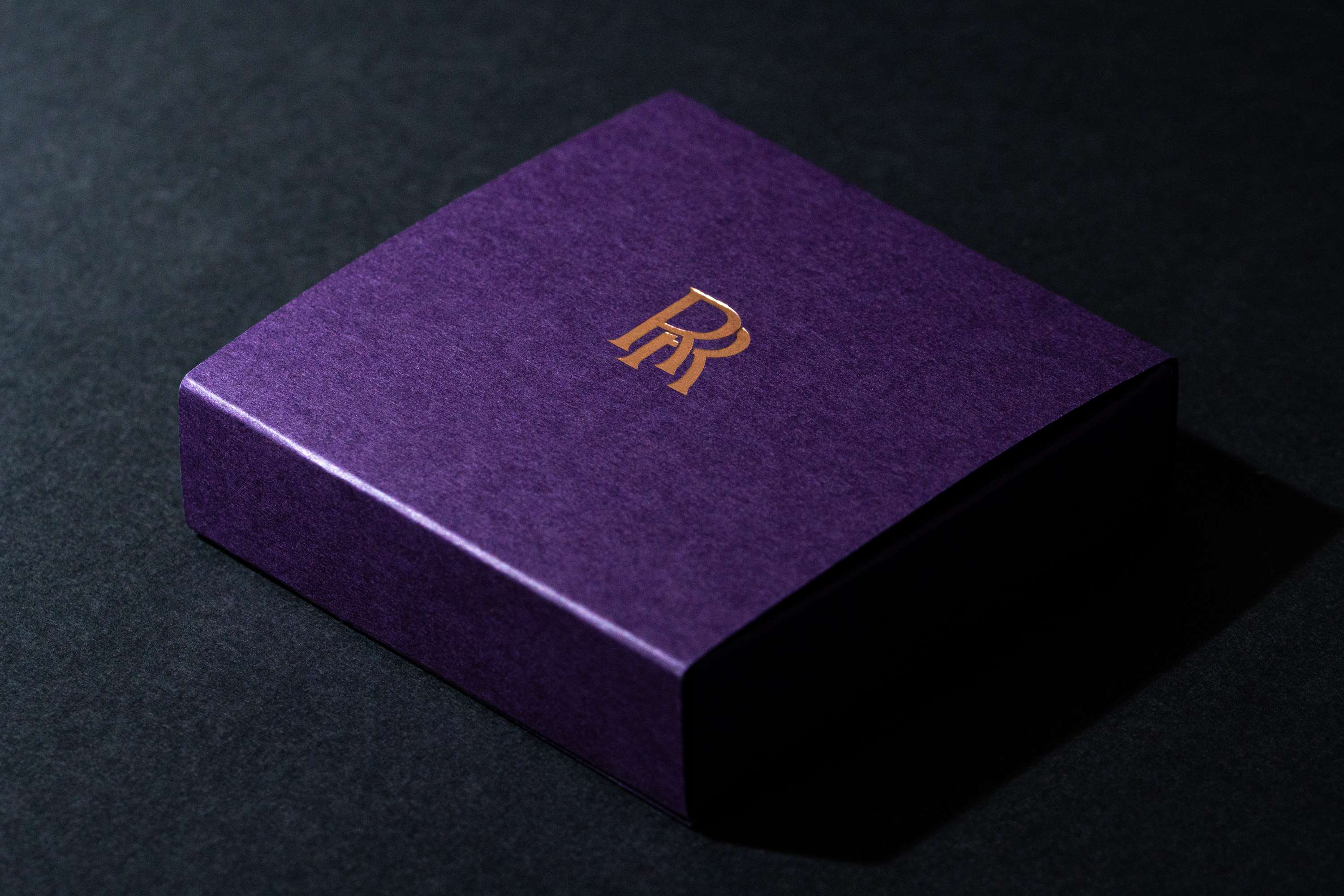
The wrap is the surface everyone touches, and it carries the widest range in the whole box. A standard coated sheet and an uncoated paper from a specialty mill can look alike in a rendering and nothing alike in the hand.
The trade tell is the turn-in, where the wrap folds over the edge and into the box. A paper dyed through the mass keeps its color right into that fold, which is one of the quiet reasons it costs what it does.
Tooling made for this box
A custom rigid box gets its own tooling. A cutting die, shaped to the flat layout, cuts the board and the wrap. If the design carries foil, a hot foil stamping die is made for that artwork, and an emboss takes its own matched pair. The wrapping machine then works around a mold built to the exact size of the box, so every new size gets a mold of its own.
All of it is made once for each design and size, and the run carries it from the first box to the last. That is also why one finish done perfectly usually outranks three sharing a lid: a blind emboss alone, crisp at every edge, can carry a whole lid.
Moving parts are parts
A lift-off lid is two pieces and nothing else. Add a hinge and magnets set into the board, and the box gains parts that each get cut, wrapped and placed before it closes for the first time. The closure is also the first thing a hand finds, so it is rarely the place to save.
The insert is a second build
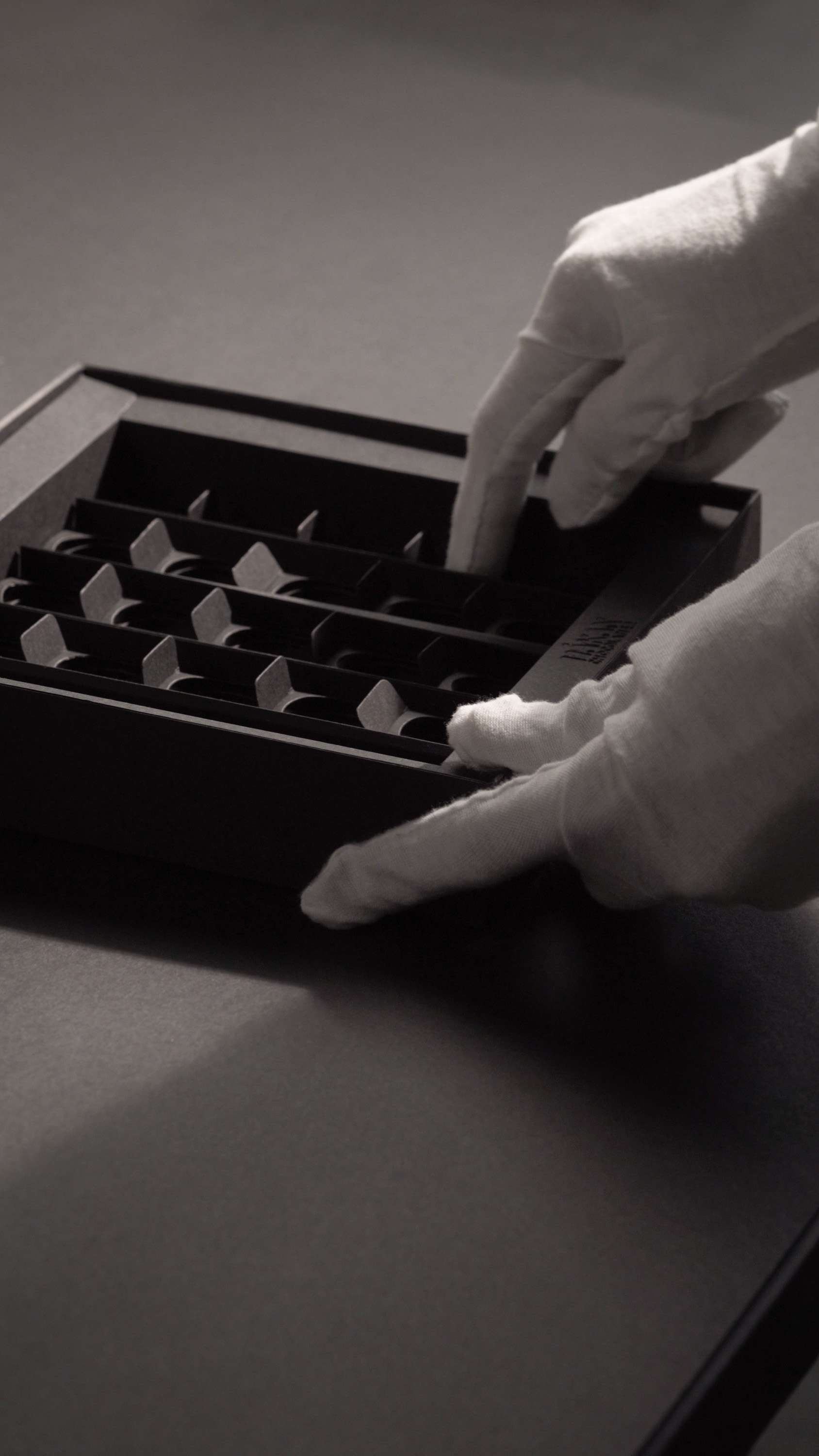
A fitting is a small box inside the big one, with its own board, its own cutting and its own wrap wherever it shows. A flat card with a single cavity is quick work. A fitting with a shaped cradle for every piece takes longer, and it is usually what people remember.
Quantity spreads the setup
Every run starts with setup: tooling made, machines set, the first boxes checked against the approved sample. That setup costs the same whether the run is one thousand boxes or fifty thousand, so the price of each box falls as the run grows.
Where to spend
When the budget has to choose, spend it where the hand goes first: the paper on the lid and the fit of the closure. Those two decide how expensive a box feels. Most of the rest decides how expensive it looks, and looking is the easier half.
Ask us for the number.
Send the product, the quantity and where the box will live, and we will come back with a quote and the decisions behind it. Every line on it is something you can pick up and open, which is more than most spreadsheets can say.
Let's Talk
More questions
It depends on the size, the board, the wrap paper, the finishes, the closure, the insert and the quantity, which is why custom rigid boxes are quoted rather than listed. Per box, the price falls as the run grows, because setup and tooling are shared across more boxes.
A rigid box is built from heavy greyboard wrapped in a separate paper and arrives assembled, so it takes more material and more steps, and it ships at full size. A folding carton is cut and folded from a single sheet of paperboard and ships flat.
Keep the footprint efficient on the sheet, choose one finish and do it well, and spend on the paper and the fit of the closure, which carry most of the impression. Quantity helps too, because setup is shared across the run.