Ten questions to ask a packaging supplier before you order
November 2026
A quote tells you a price and a date. It tells you very little about the box.
These are the questions we would ask in your place. Each one has a good answer, and the good answer is always something specific you can check.
1. Can I hold a sample before anything is printed?
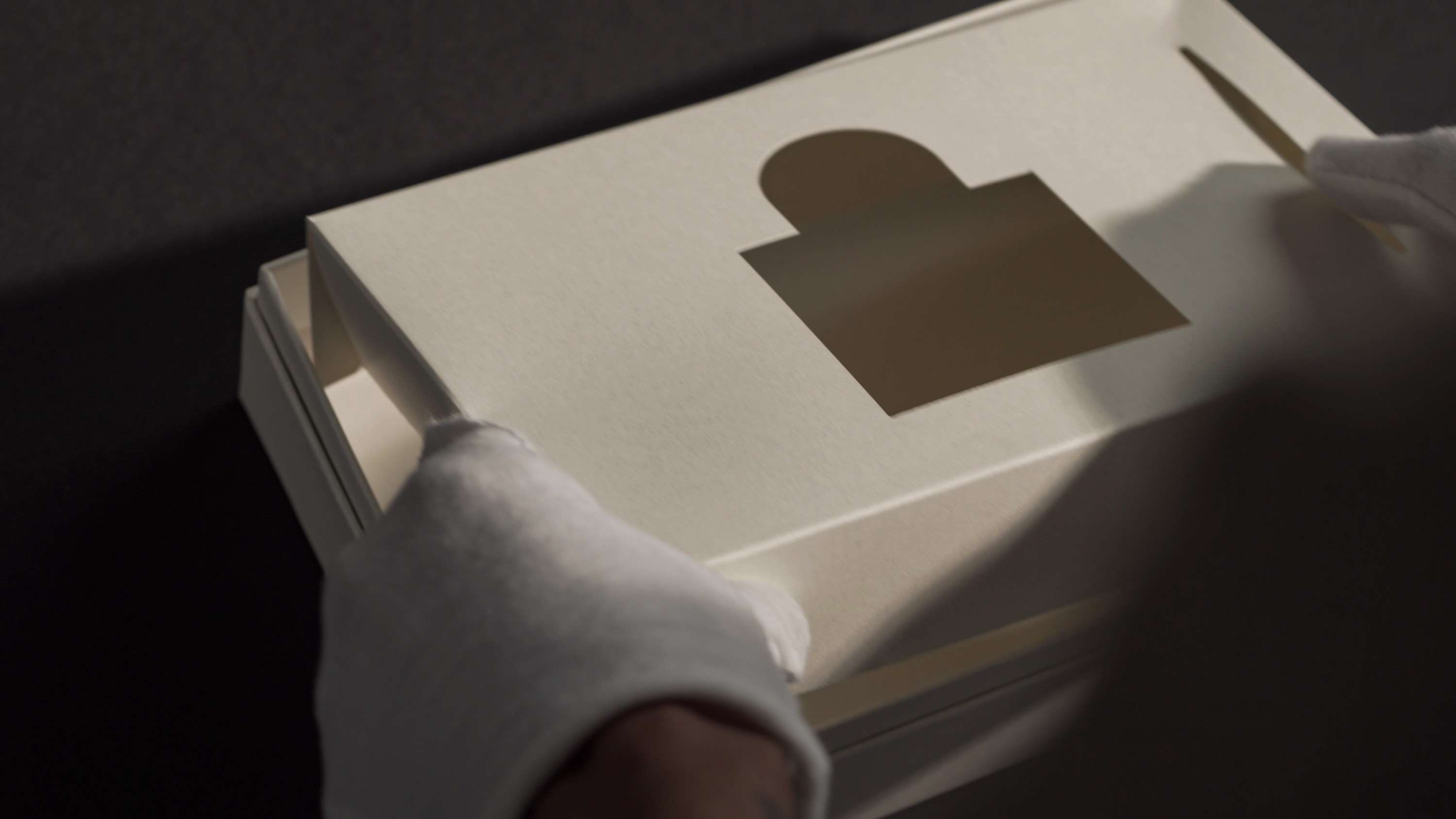
Ask for a white sample: the real structure on the real board, with no print on it. Nothing distracts you from how the box opens, which is exactly why it is the fastest way to judge one.
The good answer comes with a date. We build ours in Brooklyn on the stock the order will run on, so the lid you test is the lid you get.
2. Which mill makes the paper?
Every good wrap paper has a name and a mill behind it. Ask for both, along with its weight in gsm and whether the sheet is coated.
Those facts decide how the paper behaves at every later step, from the foil to the fold at the corner. The best answer is a swatch book open on the table.
3. Who draws the dieline?
The dieline is the flat drawing every cut, crease and glue flap comes from. Whoever draws it decides how the box behaves long before it looks like anything.
Ask whether it is drawn by the people who will run the job. When the structural designer works a few steps from the machine, a tolerance question gets answered the same afternoon.
4. Will I see my color on my paper?
A Pantone swatch is printed on a reference sheet, and your box is not. The same ink reads warmer and softer on an uncoated stock than on a coated one, which is why Pantone prints every color twice.
Ask for a drawdown: your ink, pulled across your paper, before the press run. It takes minutes and settles the color before the run begins.
5. What will the foil do on this paper?
Foil lays flat and bright on a smooth coated sheet. On a textured uncoated stock the die has to press harder to fill the grain, and the finest lines of a logo need checking at size.
Ask for a test strike of your mark on your paper. The answer you want is a physical piece you can tilt under a lamp.
6. How are the corners wrapped?
Turn a rigid box over and look at the corners. A clean wrap folds the paper over the board edge and tucks it tight, with nothing lifting where the sides meet and no grey showing at the edge.
Ask to hold a finished box from a past run and check the corners yourself. They say more about a factory than any description of it.
7. Can one fitting take the whole collection?
If your range has more than one shape, ask whether a single fitting can hold all of them. One fitting means one tool and one box across the collection, and the season can change without the packaging changing with it.
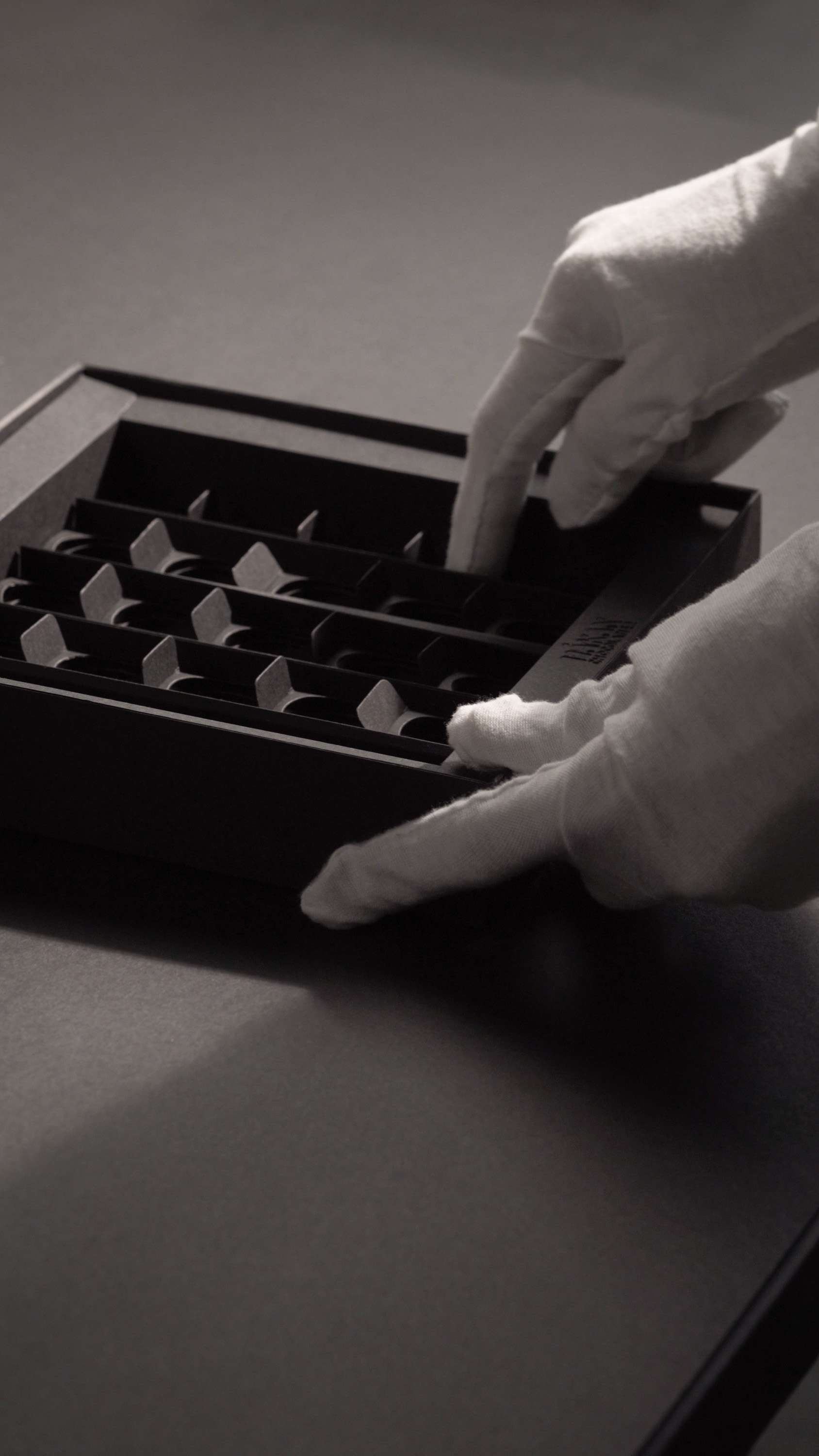
For Håkan Chocolatier we cut one paper fitting that takes every bonbon in the assortment. Ask to see the same test for your products: every piece, in the fitting, before you sign off.
8. Where is it made?
Ask where each step happens and who stands at the machine. The answer shapes your calendar more than anything else on the quote.
We produce in Brooklyn and globally, depending on what each project calls for, and we will tell you which part of your job happens where.
9. Who will I be talking to?
A box passes through several hands between the brief and the press. Ask how many, and whether the person you brief can answer a question about board grain.
At OFF.PACKAGING the design agency and the factory are the same team, so one conversation runs from the first drawing to the finished box.
10. Have you made this before?
Ask to see work in your category. Each category asks something particular of a box, and a chocolate fitting has to be food safe before it is anything else.
The best answer is a finished box in your hands. Our selected work and the industries we build for are a good place to start.
Ask us all ten.
We would rather answer them with a sample on the table than a paragraph on a page, made on the stock you will actually run.
Let's Talk
More questions
Ask the questions that can only be answered with something physical: a white sample on the production board, a drawdown of your color on your paper, a foil strike of your mark and a finished box to inspect. Then ask who draws the dieline, which mill makes the paper and where each step is made.
An unprinted sample of the box, built to the final structure on the board the order will use. It lets you judge size, fit and the way the box opens before any artwork is committed.
A strip of the actual ink pulled across the actual paper with a blade, used to approve a color before the press run. It shows how the ink reads on that sheet, which a Pantone book printed on reference stock cannot.